
Every landlord keeps a spare key. Most never use it. However, the day someone demands it, one can’t help but wonder who else holds a copy? Most cloud storage works the same way. Your files are encrypted, yes. The provider simply keeps a spare key, just in case.
Lately, “just in case” has become crowded. The Identity Theft Resource Center logged a record 3,322 data compromises in the US in 2025. IBM puts the average US data breach at $10.22 million, an all-time high. Meanwhile, governments have started asking providers for that spare key outright.
Zero-knowledge encryption takes the spare key out of the building. Below, we cover what it is and how it differs from end-to-end encryption. Then come five reasons it belongs in your security plan this year.
What Is Zero-Knowledge Encryption?
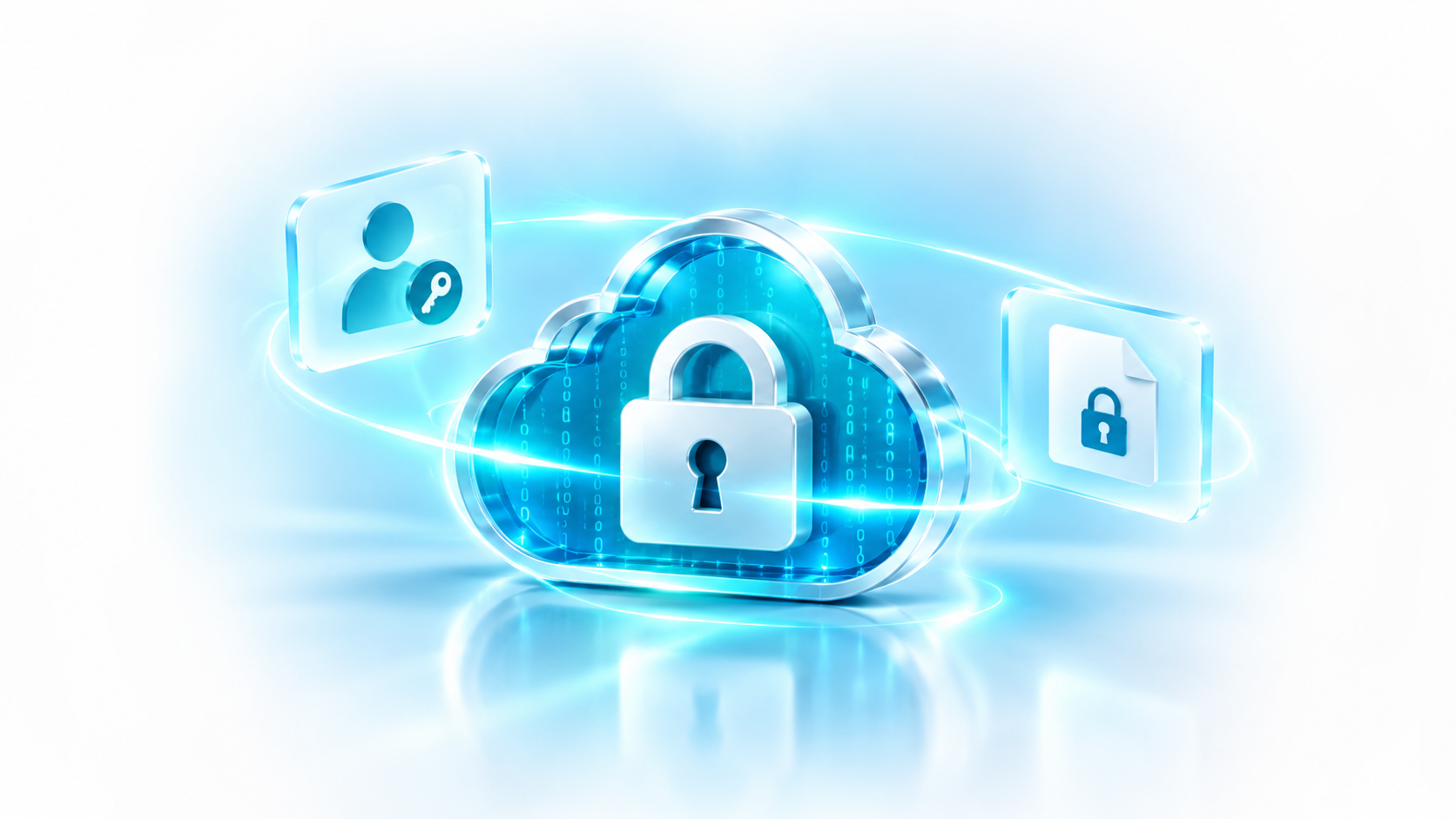
Zero-knowledge encryption means your data is encrypted on your own device, before upload. The key comes from a password only you know. The provider stores the scrambled result and never sees the key.
The mechanism behind it is called client-side encryption. “Client” simply means your laptop or phone. Zero-knowledge is the promise built on top that the provider won’t read your files because it can’t.
Picture a safe-deposit box where the bank never received a copy of the key. The bank guards the vault. Only you open the box.
How It Differs From Regular and End-to-End Encryption
“Encrypted” may be the most overworked word in tech marketing. In practice, it can mean four quite different things:
| Type | Where data gets encrypted | Who holds the key | Can the provider read your files? |
|---|---|---|---|
| Encryption in transit (TLS) | Only while traveling | Provider | Yes, once they arrive |
| Server-side encryption at rest | On the provider’s servers | Provider | Yes |
| End-to-end encryption | On the sender’s device | Sender and recipient | No |
| Zero-knowledge (client-side) encryption | On your device, before upload | Only you | No |
Traditional encryption is like sending a locked box with the key given to a trusted friend (the service provider). They can open it for you when you need them to. Zero-knowledge encryption is like sending that locked box, but you are the only one with the key, and you never share it with anyone.
End-to-end encryption and zero-knowledge encryption are close cousins. End-to-end usually describes messages moving between people, as in Signal. Zero-knowledge usually describes files resting in encrypted cloud storage. Both follow one rule: the middleman holds no key.
Reason 1: A Data Breach Becomes a Pile of Noise
Breaches no longer feel like news. They feel like weather. Verizon’s 2026 DBIR found third parties involved in 48% of breaches, up 60% in a year. In other words, your data can leak through a vendor you’ve never heard of.
Zero-knowledge encryption changes what a thief actually walks away with. Imagine a burglar who cracks a warehouse and finds only locked, unlabeled crates. Without your key, stolen files are random noise.
This isn’t just theory. pCloud once offered $100,000 to anyone who could break its client-side encryption. A total of 2,860 participants, including people from MIT and Berkeley, tried for 180 days. Nobody succeeded.
Reason 2: Insider Threats Hit a Wall
Not every leak starts outside the building. Employees get phished, bribed, careless, or simply curious. Administrators have broad access by design. Verizon’s 2026 report links 62% of breaches to the human element.
With conventional encryption, a rogue admin can still decrypt your files. This model removes that option entirely. Staff can manage servers, backups, and billing. They cannot open your documents.
Insider threats need a key to do damage. Here, there isn’t one to steal.
Reason 3: Governments Can’t Peek
This reason barely registered a few years ago. Now it might be the most important one.
Governments increasingly want the spare key. In early 2025, the UK ordered Apple to provide access to encrypted iCloud data. Apple withdrew its Advanced Data Protection feature for UK users rather than build a backdoor. A narrower demand followed in October 2025, targeting British users only.
A provider can be compelled to hand over what it stores. With client-side encryption, what it stores is unreadable. Even US agencies now push the idea. After the Salt Typhoon telecom hacks, CISA urged officials to adopt end-to-end encrypted apps.
Reason 4: Compliance Gets Simpler
Regulators like encryption, and they reward it. GDPR Article 32 names encryption as an appropriate security measure. Article 34 goes further. If breached data is unintelligible to the thief, you may not need to notify every affected person.
US health law follows similar logic. Under HIPAA, properly encrypted health data falls outside the breach notification rules.
Zero-knowledge encryption is the strongest form of that argument. For accountants, lawyers, clinics, and agencies, it turns “we take security seriously” into something verifiable. It won’t make you compliant on its own. Still, it answers the hard question of who else could see this?
Reason 5: You Get Control Back, and Trust Follows
Data ownership has a simple test. Who can open your files without asking you first? With most cloud storage, the honest answer is “several people.”
Client-side encryption shrinks that list to one. That matters for individuals storing tax returns, passports, and family scans. It matters even more for businesses. Clients trust a firm that can truthfully say, “Even our provider can’t read your files.”
Consider the alternative. IBM found the average global data breach cost $4.44 million in 2025. Trust is far cheaper to keep than to rebuild.
The Trade-Offs
This kind of protection isn’t magic. Anyone selling it as magic deserves suspicion. Keep these trade-offs in mind:
- Lose the password, lose the files. No provider can reset a key it never knew.
- Some conveniences shrink. Server-side previews, in-document search, and AI features can’t read what the server can’t see. So you can’t benefit from such features.
- It protects storage, not your device. Malware on an unlocked laptop sees whatever you see.
Fortunately, all three are manageable. pCloud, for example, lets you choose which files get client-side encryption. Everyday files stay convenient, while sensitive ones stay sealed.
Want the deeper dive into the topic? Read our explainer, What Is Zero-Knowledge Encryption?